
IVF guide
Semen analysis explained
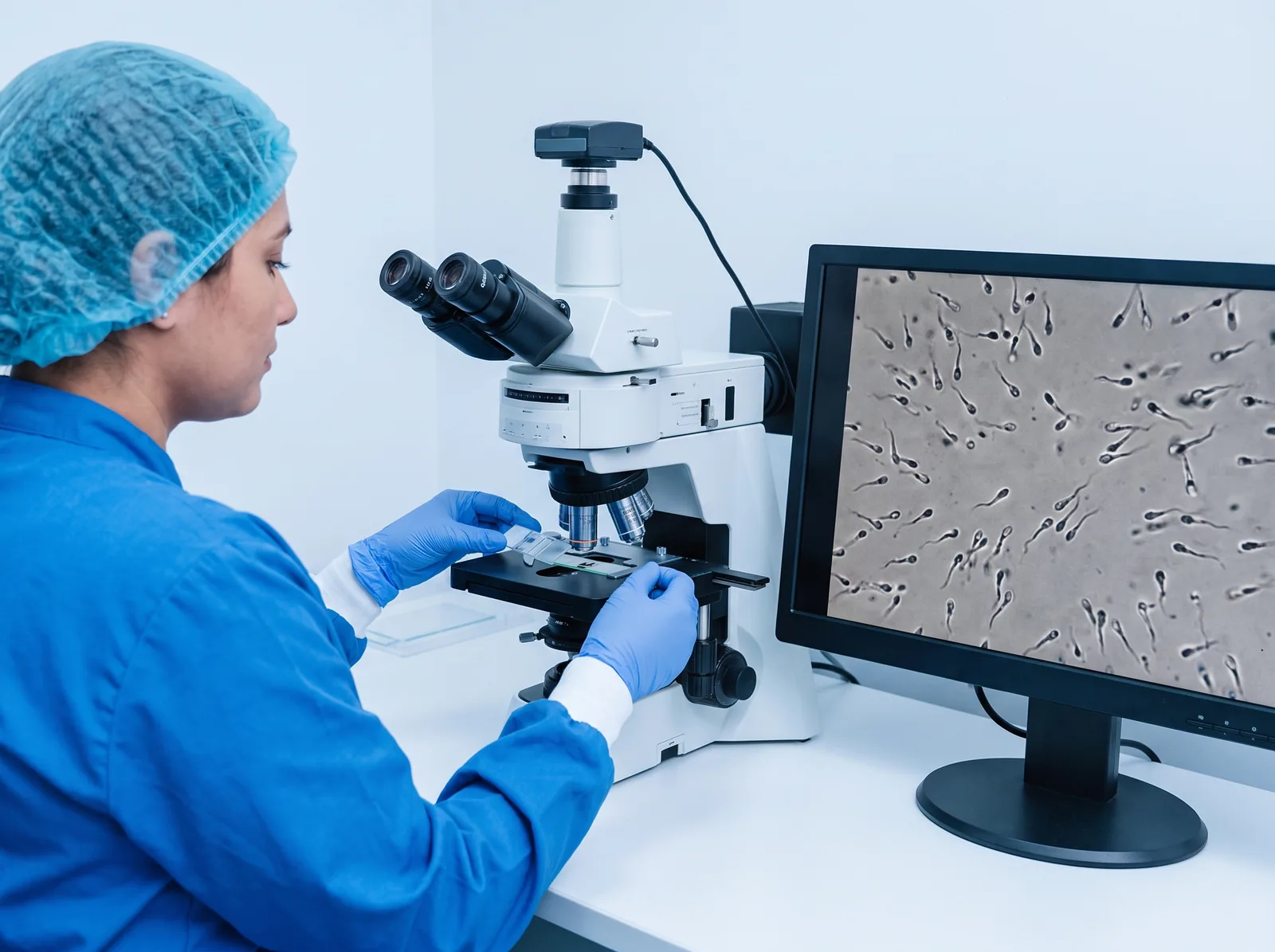
A semen analysis is one of the first tests in a fertility evaluation. It looks at the number, movement and shape of sperm, as well as other features of the sample.
Giving the sample
The sample is usually collected by masturbation into a sterile container provided by the laboratory. Lubricants and ordinary condoms are not used because they can affect sperm.1 If the sample is collected at home, it should reach the laboratory within the time given, kept close to body temperature.1

What the report shows
- Volume: the amount of semen
- Concentration and total count: the number of sperm per millilitre and in the whole sample
- Motility: the percentage of sperm that move, and of those that move forward
- Morphology: the percentage of sperm with a normal shape
- Vitality, pH and white blood cells
Reference values
The World Health Organization laboratory manual (6th edition, 2021) gives lower reference limits, for example a volume of 1.4 mL, a concentration of 16 million per mL, total motility of 42% and normal forms of 4%. These values describe the lower range seen in fertile men. They are not strict limits for fertility and are interpreted by the physician.1
Terms you may see
- Oligozoospermia: low sperm count
- Asthenozoospermia: low motility
- Teratozoospermia: low percentage of normally shaped sperm
- Azoospermia: no sperm in the sample1
After the results
Because results can vary from sample to sample, an abnormal result is often repeated after a few weeks.2 Depending on the findings, hormone tests, a scrotal ultrasound or genetic tests may be recommended.3 The results also help decide between conventional IVF and ICSI.
At a glance
- A period of 2 to 7 days without ejaculation is usually advised.
- The sample is collected into a sterile container.
- One abnormal result is often repeated.
- Sperm production takes about two to three months.
Frequently asked questions
Yes. A high fever or illness in the previous months can temporarily affect sperm production.
Not routinely. The physician may suggest it in selected situations.3
Smoking, heavy alcohol use, obesity and heat exposure may affect sperm.2 The physician may give individual advice.
References
- World Health Organization. WHO laboratory manual for the examination and processing of human semen. 6th edition. Geneva: WHO; 2021.
- National Institute for Health and Care Excellence (NICE). Fertility problems: assessment and treatment. NICE guideline NG257. 2026.
- European Association of Urology. EAU Guidelines on Sexual and Reproductive Health. Arnhem: EAU Guidelines Office; 2025.
Related topics
This page gives general information only. It does not replace an examination, and the treatment plan is decided by the physician for each person individually.