
IVF information · 5 / 9
Ovarian stimulation and monitoring
In IVF, medication is used to help several eggs develop in one cycle. Which protocol is used depends on factors such as age, ovarian reserve, body mass index and medical history.1

Types of protocols
- Long protocol: the body’s own hormone signals are first suppressed with medication, and stimulation is then started.
- Short (antagonist) protocol: stimulation starts early in the cycle, and another medication is added later to prevent early ovulation.2
- Mild or low-dose approaches: may be considered when the ovarian reserve is reduced.1
- Modified protocols: combinations of the above, chosen by the physician.
Monitoring
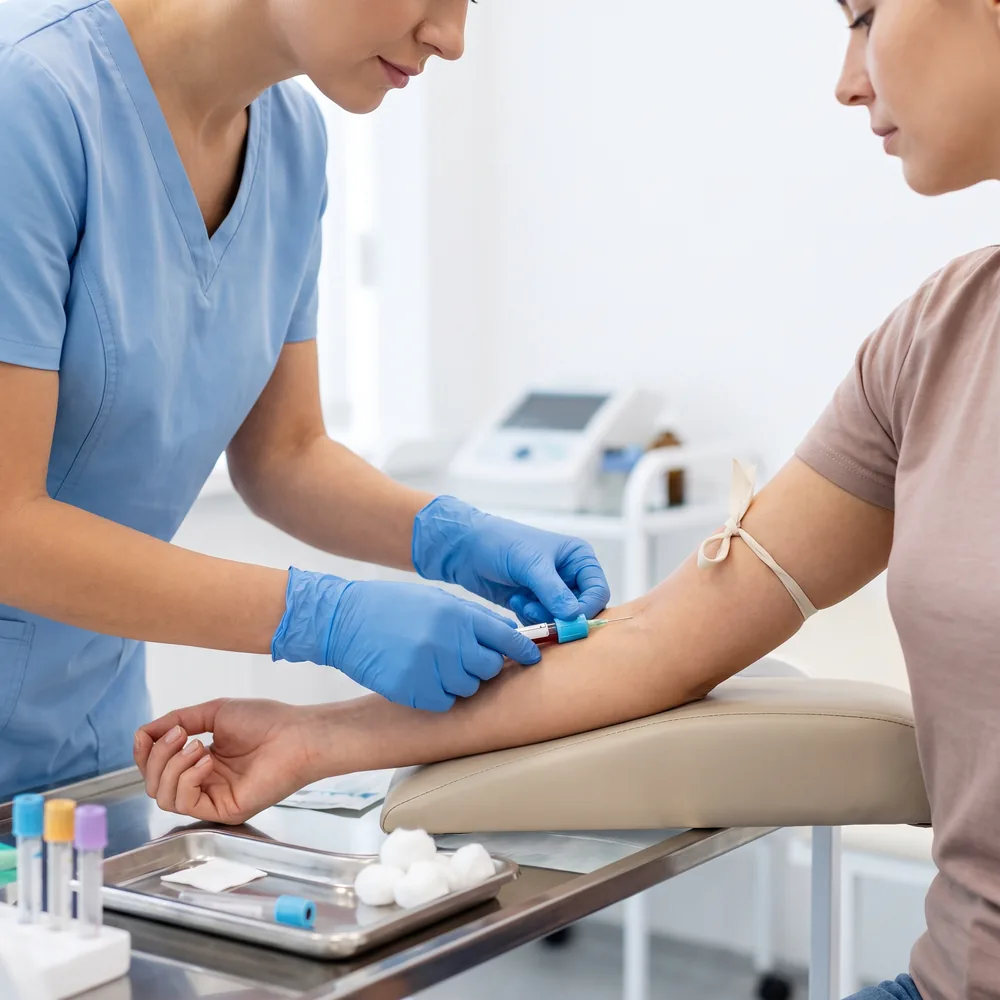
Stimulation usually lasts about 10 to 12 days. During this time the patient visits the clinic several times for ultrasound and, when needed, hormone tests. Medication doses may be changed according to the response.3 The follicles, small fluid-filled sacs that contain the eggs, are followed until they reach a suitable size.
Final maturation
When the follicles are ready, an injection is given to complete the maturation of the eggs. Egg collection is planned about 34 to 36 hours later.1 The type of injection is chosen by the physician to reduce the risk of ovarian hyperstimulation.4
References
- ESHRE Guideline Group on Ovarian Stimulation, Ata B, et al. ESHRE guideline: ovarian stimulation for IVF/ICSI: an update in 2025. Human Reproduction. 2026;41(4):498–514.
- Al-Inany HG, Youssef MA, Ayeleke RO, et al. Gonadotrophin-releasing hormone antagonists for assisted reproductive technology. Cochrane Database of Systematic Reviews. 2016;(4):CD001750.
- Kwan I, Bhattacharya S, Woolner A. Monitoring of stimulated cycles in assisted reproduction (IVF and ICSI). Cochrane Database of Systematic Reviews. 2021;(4):CD005289.
- Youssef MA, Van der Veen F, Al-Inany HG, et al. Gonadotropin-releasing hormone agonist versus HCG for oocyte triggering in antagonist-assisted reproductive technology. Cochrane Database of Systematic Reviews. 2014;(10):CD008046.
Related topics
- What is infertility and in vitro fertilization?
- Pre-assessment before IVF
- When is IVF considered?
- Starting the treatment
- Steps in IVF treatment
- Practices before and during IVF
- Recommendations during treatment
- Preimplantation genetic testing
- Ovarian hyperstimulation syndrome (OHSS)
- AMH and ovarian reserve
- PCOS and IVF
This page gives general information only. It does not replace an examination, and the treatment plan is decided by the physician for each person individually.