
IVF information · 2 / 9
Pre-assessment before IVF
Before IVF, both partners are evaluated. The tests are chosen by the physician according to the medical history.

Evaluation of the woman
A general gynaecological evaluation may include blood tests (blood count, blood type, glucose, thyroid function, some vitamins), a cervical smear and a breast examination. Hormone tests and an ultrasound are usually done on the 2nd or 3rd day of the menstrual period. The uterine cavity may be examined, and hysterosalpingography (an X-ray of the uterus and tubes) may be requested.1 Hysteroscopy or laparoscopy may be needed for conditions such as polyps, fibroids, tubal problems or ovarian cysts.
Ovarian reserve
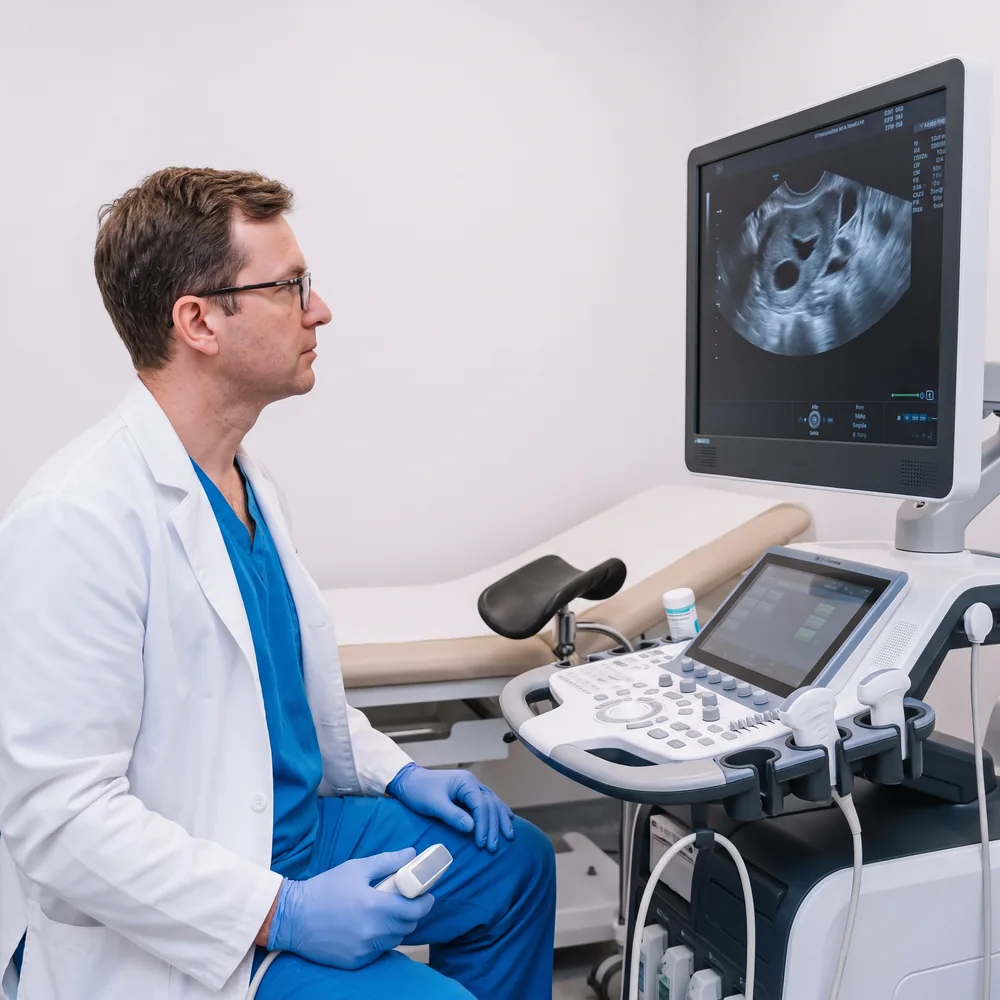
Women are born with a certain number of eggs, and this number decreases over time. Ageing of the ovaries generally begins after 35, although it can start earlier in some women.2 Smoking, ovarian surgery, chemotherapy and radiation can also reduce the number of eggs. Tests such as FSH, estradiol and AMH give information about the ovarian reserve, but they do not predict the outcome of treatment on their own.3 Age is a factor that cannot be changed.
Evaluation of the man
A semen analysis is done after 2 to 5 days of abstinence. If the result is unclear, it may be repeated after 2 to 3 weeks. Urological, hormonal or genetic evaluation may be added when needed.1
General health
Conditions such as diabetes, thyroid disease, anaemia or heart disease are managed before treatment. Weight control and stopping smoking are usually recommended.1
References
- National Institute for Health and Care Excellence (NICE). Fertility problems: assessment and treatment. NICE guideline NG257. 2026.
- American College of Obstetricians and Gynecologists. Female age-related fertility decline. Committee Opinion No. 589. Obstetrics & Gynecology. 2014;123(3):719–721.
- Practice Committee of the American Society for Reproductive Medicine. Testing and interpreting measures of ovarian reserve: a committee opinion. Fertility and Sterility. 2020;114(6):1151–1157.
Related topics
- What is infertility and in vitro fertilization?
- When is IVF considered?
- Starting the treatment
- Ovarian stimulation and monitoring
- Steps in IVF treatment
- Practices before and during IVF
- Recommendations during treatment
- Preimplantation genetic testing
- AMH and ovarian reserve
- Semen analysis explained
- Male infertility and sperm retrieval
This page gives general information only. It does not replace an examination, and the treatment plan is decided by the physician for each person individually.