
IVF guide
Embryo development and the blastocyst stage
After fertilization, embryos are kept in the laboratory for several days. This page describes the usual stages from day 1 to the blastocyst stage on day 5 or 6.

Day by day
- Day 1: the fertilized egg shows two pronuclei.
- Day 2: the embryo divides into about 2 to 4 cells.
- Day 3: about 6 to 8 cells.
- Day 4: the cells join closely together; this stage is called a morula.
- Day 5 or 6: a fluid-filled cavity forms and the embryo becomes a blastocyst.1
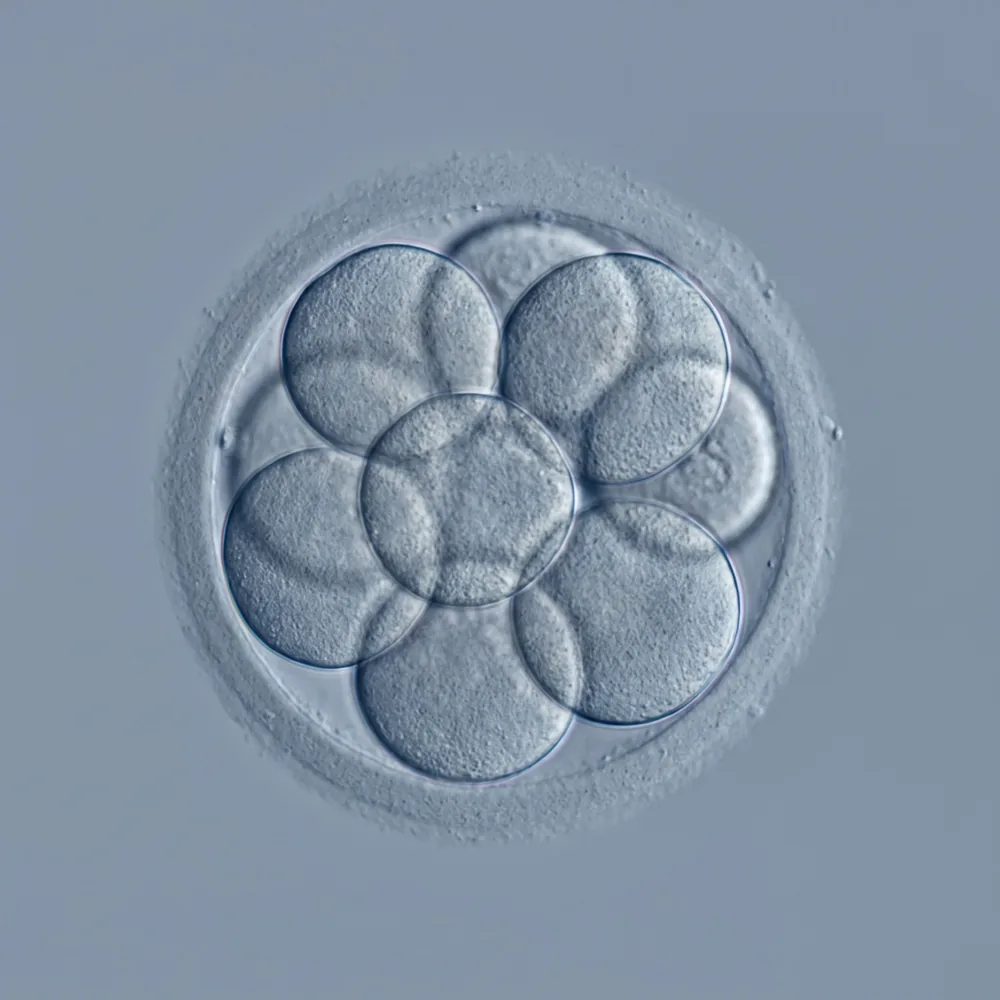
What is a blastocyst?
A blastocyst has two types of cells. The inner cell mass is a small group of cells that may later form the baby. The trophectoderm is the outer layer that may later form the placenta.1 Between them is a fluid-filled cavity.
How embryos are described
Embryologists look at the number and evenness of cells, fragmentation and, for blastocysts, the degree of expansion and the appearance of the inner cell mass and trophectoderm. Many laboratories use letter and number codes for this. These descriptions help choose which embryo to transfer first, but they cannot predict the outcome for an individual embryo.1
Day 3 or day 5 transfer
The transfer may be done on day 3 or on day 5. Culturing embryos to day 5 can help show which embryos continue to develop. In some situations, for example when there are few embryos, the team may prefer an earlier transfer. The decision is made by the physician and embryologist.2
Time-lapse imaging
Some incubators have built-in cameras that take pictures of the embryos at regular intervals, so they can be observed without being taken out. Whether this is used depends on the laboratory and the treatment plan.3
At a glance
- Day 1: two pronuclei show that fertilization has occurred.
- Day 3: an embryo usually has around 6 to 8 cells.
- Day 5 or 6: some embryos reach the blastocyst stage.
- Not every embryo develops to the blastocyst stage.
Frequently asked questions
Embryos may stop dividing for many reasons, often related to the egg, the sperm or the chromosomes. This is common and is not caused by anything the couple did.
A blastocyst has shown that it can develop for five or six days, but the best transfer day is decided individually.
In Turkey, the number of embryos that can be transferred is limited by regulation according to the woman’s age and the attempt number.4
References
- Alpha Scientists in Reproductive Medicine and ESHRE Special Interest Group of Embryology. The Istanbul consensus workshop on embryo assessment: proceedings of an expert meeting. Human Reproduction. 2011;26(6):1270–1283.
- Glujovsky D, et al. Blastocyst-stage versus cleavage-stage embryo transfer in assisted reproductive technology. Cochrane Database of Systematic Reviews. 2026. CD002118.pub7.
- Armstrong S, Bhide P, Jordan V, Pacey A, Marjoribanks J, Farquhar C. Time-lapse systems for embryo incubation and assessment in assisted reproduction. Cochrane Database of Systematic Reviews. 2019;(5):CD011320.
- Republic of Türkiye Ministry of Health. Regulation on Assisted Reproductive Treatment Practices and Assisted Reproductive Treatment Centres (Üremeye Yardımcı Tedavi Uygulamaları ve Üremeye Yardımcı Tedavi Merkezleri Hakkında Yönetmelik). Official Gazette, 30.09.2014, No. 29135 (as amended).
Related topics
This page gives general information only. It does not replace an examination, and the treatment plan is decided by the physician for each person individually.